




Couples counsellor shares 5 key boundaries to set

close up image of hand holding a phone Credit: Photo by Nathana Rebouças on Unsplash

As technology brings us closer together than ever, it also has changed how relationships work, from meeting your significant other through an online dating app to having the ability to contact other people instantly at your fingertips. Smartphones have revolutionised communication - but do they strengthen or strain romantic relationships?

With this in mind, the smartphone experts at Compare and Recycle have surveyed 2,000 people, delving into the complex world of smartphones. They discovered how many Brits trust their partners with phone passcodes, as well as partnering up with couples counsellor, Susan Leigh, to provide healthy passcode-sharing tips for couples.

Compare and Recycle's survey revealed that 33% of Brits share their phone passcode with their partner and 9% have their partner's Face ID/Touch ID set up on their smartphone. 23% of adults surveyed share their email account password, whilst just 31% do not share any passwords with their partners.

The survey found that 89% of men share some level of access to their phone with their partner. Whereas, only 75% of women share the same access with their partner, suggesting that women may have different boundaries or preferences when it comes to digital transparency.

TikTok data proves that sharing passwords may not always be the best idea It is fairly common practice for partners to share their passwords with each other for convenience in everyday situations, like changing a song in the car or answering a call when the other person is occupied. However, what starts as an act of trust can sometimes quickly turn into serious a breach of privacy. On TikTok, the topic of "going through my boyfriend's phone" has reached an astounding 108.4M views, with one video even providing tips for going undetected reaching 6.8M views alone.

Five boundaries to set when sharing passwords, according to Susan Leigh

1.Always ask permission before going on someone else's device
"It's often a courtesy to 'ask permission' or check in and mention if you want to use someone's phone, even if they always say that they don't mind. Regularly maintaining a boundary and checking in before using it prevents complacency from setting in and feeling like an automatic right to look at each other's phones".

2.Remember that it is a privilege based on trust
"Be respectful as to how you use this permission and remember that it is a privilege based on trust. Be clear from the outset as to the reasons for using each other's phones. Using it to take a special in-the-moment photo might well be understandable and justified, but retain some mutual respect and, for example, don't go into their inbox unless you've been specifically asked to, reply to their emails or update their social media accounts".

3.Exercise discretion
"Exercise discretion before deciding to read an email, answer a call or verbally comment if you see a message or incoming call popping up on their screen. It's none of your business unless they choose to make it so. Resist the temptation to scour other screens or browse their phone simply because it's in your hand."

4.Review and revisit the agreement
"Appreciate that the situation regarding your access to their phone may change and that doesn't have to be a big deal. If their work or personal commitments change there may be no need for you to have their passwords and access to their phone. If you've, up till now, customarily used each other's phones, now may be the time to renegotiate the situation for either or both of you for future reference."

5.Don't take it personally
"Avoid taking changes personally. It may be hard not to take the withdrawal of access as a slight or as a withdrawal from the relationship, but that's the time when open and honest communication can make a big difference. Knowing that they've changed their passwords or don't need you to have unrestricted access to their phone doesn't necessarily mean a lessening of closeness or intimacy."

You may also be interested in

New app launches to simplify one of marriage’s biggest admin headaches

New app launches to simplify one of marriage’s biggest admin headaches

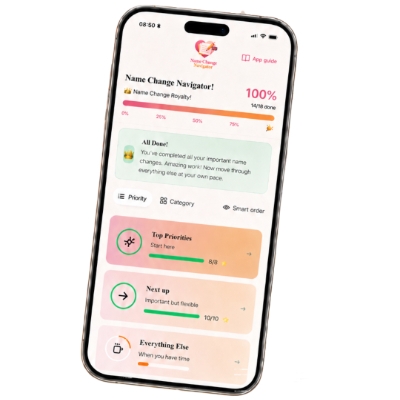
Changing your name after marriage can mean updating details with countless organisations, from banks and subscriptions to official documents and employers. New app Name Change Navigator aims to make the process easier, guiding newlyweds through each step from one platform. Founded by Rebecca Dainton, Head of Product at Flutter UK & Ireland, the app was created to reduce the stress and mental load associated with name changes. It supports a range of naming journeys, including traditional surname changes, double-barrelling, blended surnames and other choices following marriage, civil partnership, divorce or personal identity changes. The launch comes as younger generations increasingly rethink traditional naming conventions, with technology offering a more streamlined approach to this often-overlooked part of newlywed life.


READ ARTICLE

Something borrowed, something blue’ is out – but 1 in 4 Brits still value wedding cards

Something borrowed, something blue’ is out – but 1 in 4 Brits still value wedding cards

New research from Moonpig reveals the top wedding card writing confessions. A whopping 30% of Brits admit to defaulting to a safe "congratulations!" because they simply can't think of anything else to say. This is followed by recycling the same message for different couples (11%) and signing a card without knowing what your partner has written (8%). What's more, when stuck for words, one in 10 (8%) admit to turning to AI for inspiration - this rises to one in seven (14%) among 25–34-year-olds. Brits are not alone in facing this wedding card conundrum. More than half of Brits (55%) admit they have struggled with at least one aspect of wedding message writing. Nearly one in four find wedding cards (23%) or guest-book messages (24%) difficult, while one in five (20%) hit writer's block when preparing the all-important wedding speech.

READ ARTICLE

The YouGov Big Survey on Weddings

The YouGov Big Survey on Weddings

The journey that begins with "will you marry me" and ends with "I do" transforms a couple's lives in multiple ways, but it also involves a huge number of decisions, as planning a wedding is no mean feat. Every guest will have an opinion on what a wedding should be like: from what's classy and tacky, to which traditions should be followed and which can be discarded. To help prospective couples get a grip on what these potential guests hope to see in a wedding, YouGov's new Big Survey on Weddings examines all these key debates about what should and shouldn't feature on the big day, including looking at the decisions that brides and grooms would make themselves. The study is part a Big Surveys project: a series of in-depth surveys on British society. It was conducted between 7-9 August 2026, with a sample of 1,784 adults in the UK aged 18 and above.

READ ARTICLE

Brits are swapping the 'big day' for the 'right day' as searches for intimate wedding venues soar

Brits are swapping the 'big day' for the 'right day' as searches for intimate wedding venues soar

Couples are increasingly choosing quality time over large guest lists, with new search data revealing a growing demand for intimate weddings and stylish registry office ceremonies. According to Google search data analysed by Suit Direct, searches for "small intimate wedding venues near me" have increased by 86% year-on-year, while interest in "micro wedding packages" has risen 23% over the past three months, suggesting more couples are opting for meaningful celebrations that prioritise the experience over extravagance. For many, the legal ceremony is no longer just the paperwork before the "real" wedding. Instead, couples are dressing for the occasion, hiring photographers and celebrating afterwards with an intimate meal or party, proving you don't need a 200-person guest list to make the day feel special.

READ ARTICLE

Follow Your Cheshire & Merseyside Wedding Magazine on Instagram

VISIT SITE

Follow Your Cheshire & Merseyside Wedding Magazine on Facebook

VISIT SITE

Subscribe to Your Cheshire & Merseyside Wedding Magazine for free

VISIT SITE

Submit your wedding to be featured in Your Cheshire & Merseyside Wedding Magazine

VISIT SITE