The Speech Surgery: how long is too long?

1000 words, 2000 words, has there been a speech even longer than this? Heidi Ellert McDermott, founder of Speechy discusses the ideal speech length

man sat writing in in his home in a pad

My groom says he's finished his speech and he's really happy with it but it's almost 2,000 words long. Is that too much?

Yes. All speeches should be under ten minutes long. It seems obvious but I've seen several speeches (generally the best men) go well over half an hour, oblivious to the yawns or heckling. That's no more than 1,300 words maximum, allowing for pauses or laughter on the day. Remind your fiancé that his first draft is just the start of the writing process.

As Ernest Hemingway reportedly said 'The first draft of anything is sh*t.' And that's someone who won the Nobel Prize for Literature. The public speaking expert, Alan Berg, also points out: 'There's the expression, 'If I had more time, I would have written a shorter letter'. The quote is thought to have derived from the writing legend Mark Twain and it goes to show how hard the editing process can be.

With Speechy's Edit Service, the main thing we do is make the speech punchier. We look at the overall structure and see if all the stories and lines are actually necessary. Do they really add much? Generally, the shorter the sentence, the briefer the story, the more impact it will have.

Test the theory out. Save your first draft but then get busy with that delete function. Cut your word count by a third. Do you lose much? The editing process can feel brutal but it's vital. It might mean you have to drop some of your favourite lines but no one will miss them. Your guests didn't know they existed. To quote Coco Chanel, "Before you leave the house, look in the mirror and take one thing off". Make every sentence matter.

After working through the text version of the speech, it's now time to start reading your speech out loud and editing the audio version! We don't speak in the same form as we write, the sentence construction is different, so does your speech feel overly formal? Are there sections or words that you keep tripping over? Does the punchline need to be moved?

As Alan Berg says, 'Your mind doesn't get tongue-tied, your tongue does, so reading your speech out loud is essential in perfecting your speech.'

For more inspiration check out speechy.com/groom-speech-examples

You may also be interested in

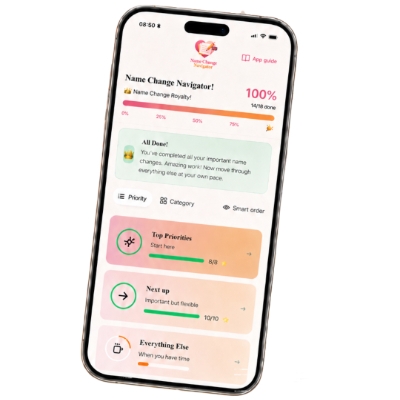
New app launches to simplify one of marriage’s biggest admin headaches

New app launches to simplify one of marriage’s biggest admin headaches

Changing your name after marriage can mean updating details with countless organisations, from banks and subscriptions to official documents and employers. New app Name Change Navigator aims to make the process easier, guiding newlyweds through each step from one platform. Founded by Rebecca Dainton, Head of Product at Flutter UK & Ireland, the app was created to reduce the stress and mental load associated with name changes. It supports a range of naming journeys, including traditional surname changes, double-barrelling, blended surnames and other choices following marriage, civil partnership, divorce or personal identity changes. The launch comes as younger generations increasingly rethink traditional naming conventions, with technology offering a more streamlined approach to this often-overlooked part of newlywed life.
READ ARTICLE

Flawsome! reveals 81% of Brits say weddings don't need to be perfect to be memorable 

Flawsome! reveals 81% of Brits say weddings don't need to be perfect to be memorable 

Growing frustration with wedding perfection culture is reshaping how couples plan their big day, with sustainability, guest experience and authenticity becoming increasingly important, according to new research from Flawsome!. A national study of 2,000 UK adults found that 81% believe a wedding does not need to be perfect to be memorable, while 71% say social media has increased pressure on couples to create a "perfect" day. Sustainability is also becoming a key consideration, with 52% saying it is important when planning a wedding. Yet wedding waste remains widespread, with 41% of respondents having seen food and drink thrown away at weddings, while 32% recalled single-use decorations being discarded and more than a quarter had seen flowers go to waste.

READ ARTICLE

Something borrowed, something blue’ is out – but 1 in 4 Brits still value wedding cards

Something borrowed, something blue’ is out – but 1 in 4 Brits still value wedding cards

New research from Moonpig reveals the top wedding card writing confessions. A whopping 30% of Brits admit to defaulting to a safe "congratulations!" because they simply can't think of anything else to say. This is followed by recycling the same message for different couples (11%) and signing a card without knowing what your partner has written (8%). What's more, when stuck for words, one in 10 (8%) admit to turning to AI for inspiration - this rises to one in seven (14%) among 25–34-year-olds. Brits are not alone in facing this wedding card conundrum. More than half of Brits (55%) admit they have struggled with at least one aspect of wedding message writing. Nearly one in four find wedding cards (23%) or guest-book messages (24%) difficult, while one in five (20%) hit writer's block when preparing the all-important wedding speech.

READ ARTICLE

The YouGov Big Survey on Weddings

The YouGov Big Survey on Weddings

The journey that begins with "will you marry me" and ends with "I do" transforms a couple's lives in multiple ways, but it also involves a huge number of decisions, as planning a wedding is no mean feat. Every guest will have an opinion on what a wedding should be like: from what's classy and tacky, to which traditions should be followed and which can be discarded. To help prospective couples get a grip on what these potential guests hope to see in a wedding, YouGov's new Big Survey on Weddings examines all these key debates about what should and shouldn't feature on the big day, including looking at the decisions that brides and grooms would make themselves. The study is part a Big Surveys project: a series of in-depth surveys on British society. It was conducted between 7-9 August 2026, with a sample of 1,784 adults in the UK aged 18 and above.

READ ARTICLE

Follow Your Cheshire & Merseyside Wedding Magazine on Instagram

VISIT SITE

Follow Your Cheshire & Merseyside Wedding Magazine on Facebook

VISIT SITE

Subscribe to Your Cheshire & Merseyside Wedding Magazine for free

VISIT SITE

Submit your wedding to be featured in Your Cheshire & Merseyside Wedding Magazine

VISIT SITE