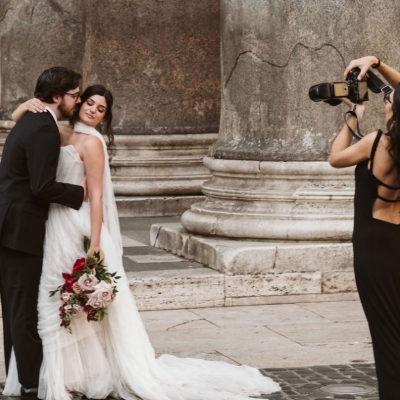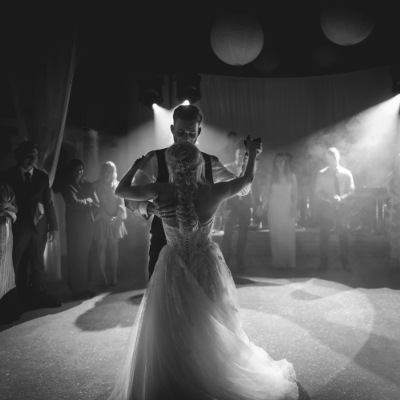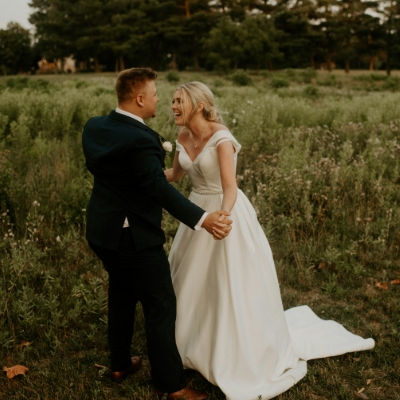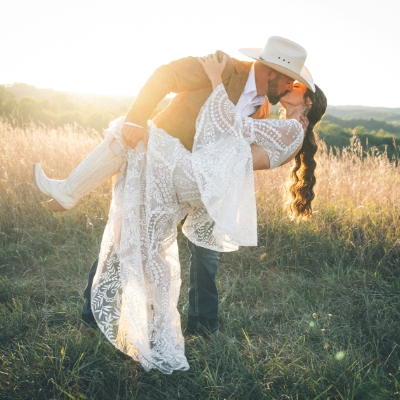
In the biggest reform proposed to England's marriage ceremony law, the government's legal advisors have recommended that couples be allowed to marry in whatever outdoor location they choose. But for couples that might be unsure of what these reforms will mean in practice, and how and when they will likely to become law, County Wedding Magazines chats to Sebastian Burrows, managing partner at Stowe Family Law, to find out more....
"Laws around marriage have come some way in catching up with modern life, acknowledging that family structures have moved on from archaic traditions to include a variety of socially accepted dynamics," shares Sebastian. "However, one caveat that has remained since the early 19th century is that couples must have their ceremonies indoors. But good news may be to come for those couples looking to tie the knot outdoors, whether it be on a clifftop overlooking the beach or one's back garden.
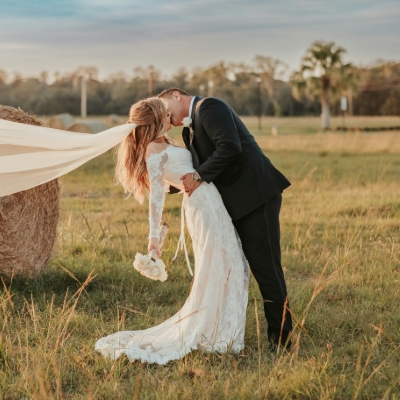
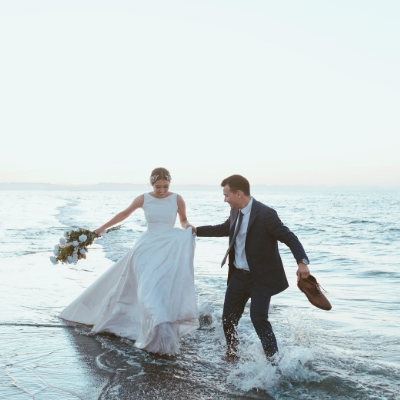
"This month, a Law Commission report has been published calling for couples to have 'more freedom to choose where they marry'. In the most significant reform ever proposed to England's marriage ceremony law, the report recommends lifting wedding and civil partnership ceremony restrictions in England which are confined to a place of worship, such as a church, or a licensed secular venue, such as a registry office. The report calls for weddings to be allowed not only in outdoor settings such as private gardens, parks and beaches and the grounds of licensed wedding venues but also in private homes and even cruise liners.
"The Law Commission – namely the independent adviser to the government on law reform in England and Wales – has recommended in the consultation paper that current rules on weddings be updated to reflect changes in society, especially when compared to Scotland, Ireland and the Channel Islands, which adopt a more modern approach to how and where weddings are conducted. In terms of matrimonial law, such a change would match with the principle of making the legal union of couples open to all and something to be welcomed rather than restricted.
"The arguments that will flow from this report will be varied, but the Law Commission seeks clearly to push towards secularisation of weddings, providing couples with greater flexibility. A potential step forward with regards to respecting individuals' personal beliefs, this consultation acknowledges couples who do not want either a civil or religious wedding, instead providing them with the alternative of having a ceremony that reflects their ideals. To this end, government legal advisers also say that the law should be reformed to allow humanists to officiate. The flexibility this would create could also lead to fewer couples embarking on family life saddled with (often eye-watering) wedding debt that can place them under massive pressure straight away, in turn setting the marriage up for increased risk of failure from the very start.
"For couples looking to keep the cost of a wedding down, this legal development would be very much welcomed. While some might see a change in the law as a move towards more extravagant or soulless Vegas-style ceremonies, it may also provide a much-needed boost to the wedding industry in these challenging times.Indeed, the opportunity to have a video link wedding may be attractive to those keen to marry but fearful of the Covid-19 risk. While ministers are under no obligation to follow the recommendation set out by the Law Commission, its views do carry significant weight in Whitehall. Currently, the Church of England is studying the proposals, so it remains to be seen whether the law will soon play a significant role in catching up with modern society." - Sebastian Burrows is a managing partner at Stowe Family Law
New app launches to simplify one of marriage’s biggest admin headaches
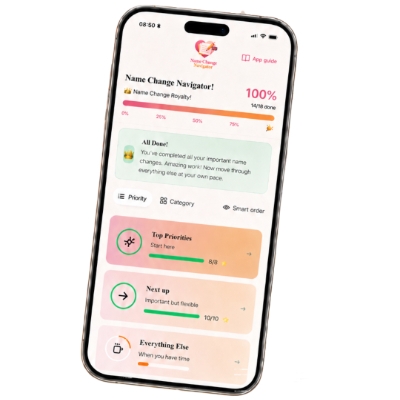
Changing your name after marriage can mean updating details with countless organisations, from banks and subscriptions to official documents and employers. New app Name Change Navigator aims to make the process easier, guiding newlyweds through each step from one platform. Founded by Rebecca Dainton, Head of Product at Flutter UK & Ireland, the app was created to reduce the stress and mental load associated with name changes. It supports a range of naming journeys, including traditional surname changes, double-barrelling, blended surnames and other choices following marriage, civil partnership, divorce or personal identity changes. The launch comes as younger generations increasingly rethink traditional naming conventions, with technology offering a more streamlined approach to this often-overlooked part of newlywed life.
READ ARTICLE
The YouGov Big Survey on Weddings
The journey that begins with "will you marry me" and ends with "I do" transforms a couple's lives in multiple ways, but it also involves a huge number of decisions, as planning a wedding is no mean feat. Every guest will have an opinion on what a wedding should be like: from what's classy and tacky, to which traditions should be followed and which can be discarded. To help prospective couples get a grip on what these potential guests hope to see in a wedding, YouGov's new Big Survey on Weddings examines all these key debates about what should and shouldn't feature on the big day, including looking at the decisions that brides and grooms would make themselves. The study is part a Big Surveys project: a series of in-depth surveys on British society. It was conducted between 7-9 August 2026, with a sample of 1,784 adults in the UK aged 18 and above.
READ ARTICLE
Brits are swapping the 'big day' for the 'right day' as searches for intimate wedding venues soar
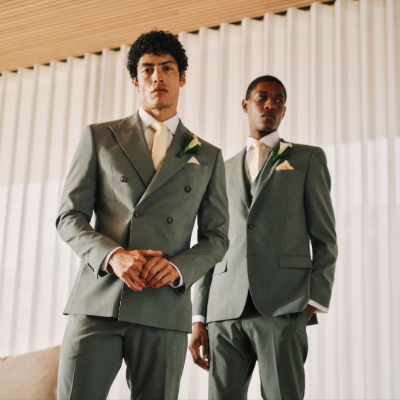
Couples are increasingly choosing quality time over large guest lists, with new search data revealing a growing demand for intimate weddings and stylish registry office ceremonies. According to Google search data analysed by Suit Direct, searches for "small intimate wedding venues near me" have increased by 86% year-on-year, while interest in "micro wedding packages" has risen 23% over the past three months, suggesting more couples are opting for meaningful celebrations that prioritise the experience over extravagance. For many, the legal ceremony is no longer just the paperwork before the "real" wedding. Instead, couples are dressing for the occasion, hiring photographers and celebrating afterwards with an intimate meal or party, proving you don't need a 200-person guest list to make the day feel special.
READ ARTICLE
Expert at Cake Box, shares 2026 wedding trends
Weddings may be rooted in tradition, but 2026 is seeing couples put their own spin on the big day. From reimagined wedding cakes to more personal, less conventional celebrations, today's couples are increasingly choosing what feels meaningful to them rather than simply following the rules. To explore how wedding traditions are evolving, Okay Rahman, Head of Product and in-house cake expert at Cake Box, shares their insight into the biggest wedding trends of 2026 — and how couples are putting a fresh, modern twist on some of the most-loved elements of the day. He said... "We're seeing that wedding cakes are becoming much more personal in 2026. The traditional tiered cake certainly hasn't disappeared, but couples are feeling less tied to the idea that a wedding cake has to look or taste a certain way. These days, it's being treated as another part of the styling of the day, so the design reflects the couple, the venue and the overall feel of the wedding.